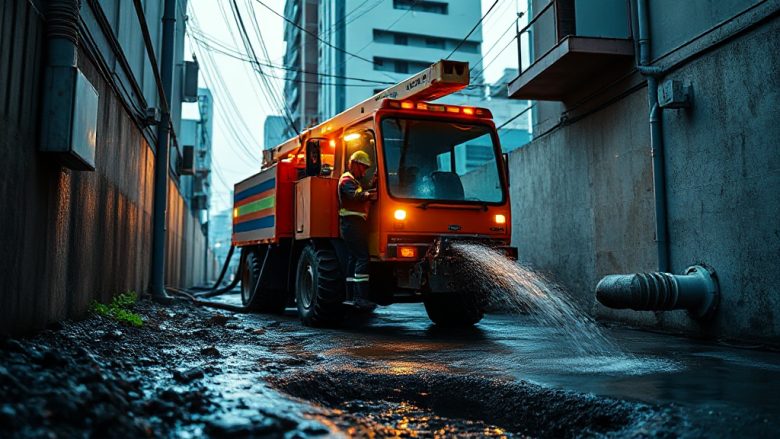
How Paraisópolis’s Layout Shapes Its Drain and Sewer Problems
Paraisópolis is not a flat grid of identical lots. Its streets climb and twist across steep terrain, buildings press tightly against one another, and pipe networks of wildly different ages run beneath the same block. That physical layout is the single biggest reason the neighborhood sees the drain and sewer problems it does — and why a desentupidora Parelheiros call often involves more than a simple clog removal.
If you live or manage property here, understanding how the built environment produces specific failures helps you describe the problem accurately, ask the right questions, and avoid booking the wrong service. This is a geography-first look at drainage in Paraisópolis, not a generic maintenance checklist.
The Physical Layout and Why It Changes Drainage Behavior
Paraisópolis sits on hillside ground where roads follow contours rather than a planned grid. Steep inclines mean wastewater and rainwater move faster in some stretches and pool in others. Where a street levels out or turns sharply, flow slows and solids settle — the classic setup for repeated blockages in the same spot.
Building density compounds this. Homes and businesses are packed tightly, often sharing walls or sitting on small lots with narrow setbacks. When many dwellings connect into a limited public network, the shared line carries more load than its original design anticipated. Density turns individual clogs into shared-line problems, because one property’s slow drain can signal a blockage affecting several households.
Pipe age is the third variable. A single block can contain recently replaced PVC sections next to older, corroded or root-invaded lines. Mixed materials behave differently under pressure and respond differently to cleaning methods. A technician who assumes uniform pipe conditions will misdiagnose the job.
Steep Streets and Flow Velocity
On steep grades, high velocity scours some pipes clean but accelerates wear at joints and bends. Erosion at connections lets soil and roots enter, creating entry points for future blockages. Downhill neighbors may receive debris flushed from above, so the visible problem and the source are rarely in the same place.
Tight Lots and Shared Connections
Narrow lots push kitchens, bathrooms and laundries close together, and informal additions sometimes tie new fixtures into old lines without resizing them. The result is a line carrying more fixtures than it was built for, with fewer cleanouts than a plumber would want. Limited cleanout access makes diagnosis slower and more invasive.
Problem Types by Housing and Construction Type
Different building types in Paraisópolis fail in different ways. Recognizing which category your property falls into narrows down what is likely happening before anyone arrives.
Self-Built and Incrementally Expanded Homes
Homes built and expanded over years often have drainage added piecemeal. A bathroom added later may drain into a line sized for a single sink. Grease, soap and food particles accumulate in undersized runs, producing slow drains that return weeks after a quick plunge. These properties benefit from camera inspection to map what is actually connected.
Multi-Unit and Shared-Wall Buildings
Where several units share a wall or a courtyard drain, responsibility for a blockage is often unclear. A backed-up floor drain in one unit may originate in a shared vertical stack or a courtyard gully serving everyone. Shared lines require coordinated access and clear communication between neighbors before work begins, or the job stalls.
Ground-Floor Commercial Frontage
Shops at street level often have kitchens or wash areas discharging into lines that also serve residential units above. Grease from food preparation is the dominant cause of blockages here, and the fix is rarely just mechanical: without grease management, the clog returns. Commercial frontage also tends to sit at the low point of a slope, where backups concentrate.
| Housing type | Typical failure | What usually helps |
|---|---|---|
| Self-built home | Undersized or misrouted branch lines | Camera inspection, then targeted cleaning or rerouting |
| Shared-wall multi-unit | Blocked shared stack or courtyard gully | Coordinated access, high-pressure jetting of the common line |
| Ground-floor commercial | Grease buildup at the low point | Degreasing, jetting, and a grease-management routine |
What This Means When You Book a Service
Because Paraisópolis problems are shaped by terrain and shared infrastructure, the quality of the booking conversation matters. Describe the location on the slope, whether the issue affects one fixture or several, and whether neighbors see the same symptom. That information tells a technician whether to expect a local clog or a shared-line blockage.
Ask whether the company serves this specific neighborhood and understands its access constraints. Narrow streets, tight courtyards and limited parking affect how equipment arrives and how long a job takes. A team familiar with the area plans for this; a generic call center does not. When you contact a desentupidora Parelheiros São Paulo SP provider, confirm the address details and access route in advance.
Also ask what method will be used. High-pressure jetting suits grease and soft buildup in sound pipes; it can damage fragile older lines if pressure is not adjusted. Mechanical augers handle roots and hard obstructions but may not clear grease films. A camera inspection before and after is the honest way to confirm the cause and verify the result. Insist on knowing the cause, not just the clearance.
Preventive Steps That Fit the Terrain
- Keep courtyard gullies and drain covers clear of leaves and debris, especially before heavy rain.
- Avoid pouring grease down kitchen drains in ground-floor commercial units; use a collection container.
- Watch for recurring slow drains at the same fixture — repetition points to a structural cause, not a one-off clog.
- Coordinate with neighbors when a shared line backs up, so the whole line is treated rather than one branch.
Matching the Service to the Neighborhood’s Real Constraints
The practical takeaway is that Paraisópolis rewards specificity. A hillside layout, dense shared connections and mixed pipe ages mean the same symptom can have three different causes depending on where you stand. Booking a desentupidora em Parelheiros São Paulo SP service with a clear description of your building type, slope position and shared-line situation gets you a faster, more accurate response than a vague emergency call.
Treat drainage here as an infrastructure question, not a household annoyance. When a blockage recurs, the useful next step is diagnosis — camera inspection, a map of what connects to what, and a plan that accounts for the slope and the shared line. That approach costs a little more upfront and far less over time than repeatedly clearing the same clog.